
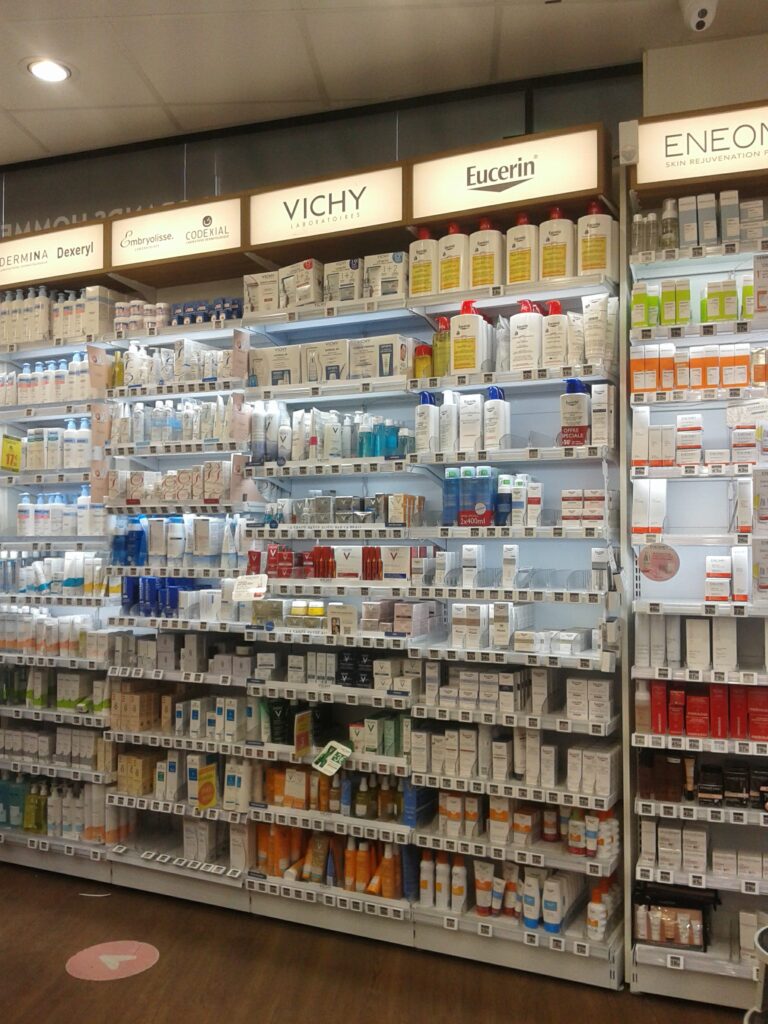
In modern beauty and skincare retail, the skincare category occupies a significant amount of shelf space. For illustration, this article uses the skincare section of a French pharmacy, where a single fixture with 5–6 shelves displays dozens of brands simultaneously: La Roche-Posay, Vichy, Avène, Eucerin, SVR, and others. Prices for adjacent products range from €29 to €35, €40 and above, while the total number of SKUs per linear meter can exceed 120 units.
But from a decision-making perspective, another issue emerges: how does a customer understand the difference between similar products directly at the shelf?
Category Structure: Brand Organization vs. Customer Need
The category is organized according to the principle of “one brand — one block” (the La Roche-Posay section, the Vichy section, the Avène section). However, customers come with a specific need, and comparisons are made on the spot between products designed for particular concerns or skincare objectives (barrier repair, anti-aging, hydration, sensitive skin, pigmentation, acne, and others). Shelf dividers are often absent or display only brand logos.
Creams, serums, and specialized skincare products from different brands sit side by side on the same shelf.
At the point of choice, a brand competes not only with neighboring manufacturers but also with its own products.
Comparing two products often requires picking up the packaging and reading the fine print on the back of the box, because the key differences are not clearly presented on the front.
When Visual Codes Begin to Repeat
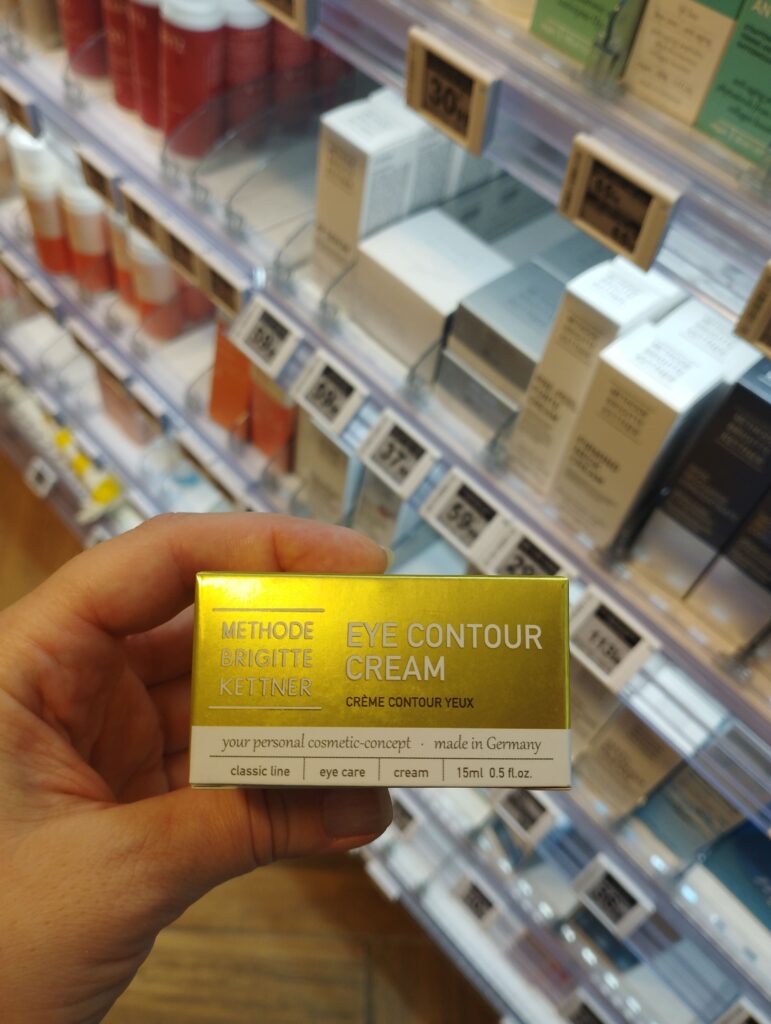
In the skincare category, many brands use similar design conventions (medical aesthetics, laboratory terminology, and a light color palette). This reinforces category recognition and trust, but at the same time makes it more difficult to distinguish products directly at the shelf. From arm’s length, bottles from several different brands can appear virtually identical.
| Environment Element | Actual Shelf Manifestation | Perception Result |
| Repetitive medical codes | Labels such as dermatologique, laboratoire, expert, testé, peaux sensibles appearing on adjacent packages. | These words lose their distinctiveness and stop serving as differentiating features of a specific product. |
| Active ingredients highlighted on the front | Ingredient names such as niacinamide, retinol, vitamine C, and concentration percentages used as central design elements | The shelf becomes a chemistry chart, shifting the task of decoding formulations directly into the retail environment. |
| Dominance of a light color palette | Dense rows of white, blue, and pastel bottles within the same line of sight | The shelf merges into a single visual field with few focal points for attention. |
| Similar packaging structure | Repetition of the same information hierarchy: logo → active ingredient → promise | Instead of differentiated solutions, the shelf presents similar-looking options distinguished mainly by trademarks. |
Price as the Only Reference Point When Differences Are Unclear
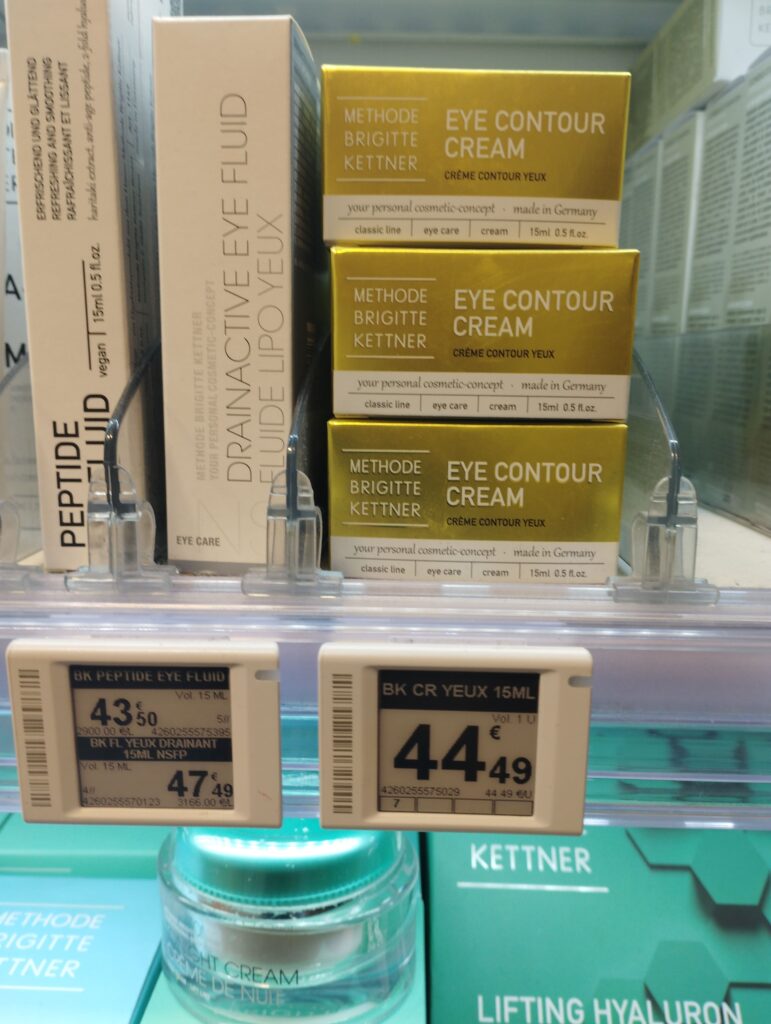
Products with noticeable price differences stand next to each other, yet the packaging itself does not explain what accounts for those differences. Shelf labels usually display the price and discount amount, but provide no additional guidance or value proposition.
If the packaging does not communicate the difference, price remains the only clear reference point for comparison.
When the distinction is not obvious and cannot be understood quickly, the decision-making process is reduced to basic automatic choices: selecting a familiar brand, looking for promotions, or choosing a product already used before.
The Transfer of the Navigation Function: Smartphone and Consultant
n a retail environment, three factors help customers compare products and make a decision:
- The brand (through recognition, reputation, and habit);
- The consultant (through personalized explanations and recommendations);
- The retail environment (through placement, category organization, and visual cues on the shelf).
Observation of shopper behavior at the shelf reveals a recurring pattern: the average period of hesitation without action is 30–40 seconds. If the retail environment does not provide sufficient guidance for comparison (reviews, formulations, or differences between products), part of its function is transferred either to the consultant or to independent online research.
If the consultant is busy or unavailable, conversion declines because the shelf itself does not facilitate the decision. Customers either choose a familiar brand (bypassing new products) or leave without making a purchase.
In other cases, shoppers take out their smartphones to read reviews, examine ingredients, and understand the differences between products. At that point, attention is captured by a digital interface, and communication shifts from the store environment to external platforms, where algorithms immediately present alternatives or contextual advertising from competitors.
Retail environments should be designed so that the shelf itself answers at least some of these questions.

Conclusion
Cosmetics retail today is saturated with products, yet customers often struggle to navigate the shelf itself. Simply adding another product is not enough — expanding the assortment without a clear shelf logic only makes decision-making more difficult.
In competitive categories, businesses need to design not only the assortment structure and shelf arrangement, but also the moment when the customer encounters the product in the retail environment:
- which differences are immediately understood;
- which characteristics require explanation;
- which design elements help compare alternatives;
- where barriers to decision-making arise.
The shelf is the first interface between a product and a customer. In a saturated market, brands compete not only through formulations, but also through their ability to clearly explain their place among neighboring alternatives at the very moment of choice.