
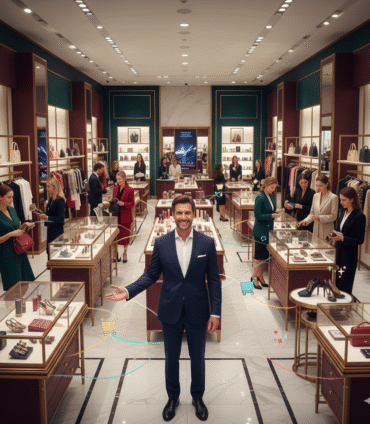

Entering the South Korean Market: A Cognitive Risk Audit for Business — The Sephora Case
In 2024, Sephora announced its exit from South Korea. Why did a retail giant with an unlimited budget lose to a local player like Olive Young?

The New Culture of Commerce
The New Culture of Commerce

A customer’s choice is almost never rational. It is shaped in advance — by the environment, cultural patterns, and the context a person enters long before the point of purchase.
Most companies continue to intensify marketing and traffic without understanding why the customer is not ready to pay or does not consider the product relevant due to price, lack of trust, or misunderstanding of value — even before the purchase.
Designing the environment, touchpoints, and interaction scenarios helps remove barriers and increase long-term conversion. As a result, acquisition costs decrease and LTV grows.
The approach is based on applied behavioral science, observation of real behavior, ethnographic research, and customer journey mapping — from product and environment to scaling in international markets.
→ About the approach and principlesThe foundation of all work is an understanding of how choice is formed. Behavioral architecture is grounded in behavioral science and translates it into applied solutions — without attachment to channels or tools.

Depending on the situation, work may begin with research, continue with design, or move to the level of strategy and scaling. These are different entry points into a single system.

This section brings together observations, research, and project cases across different contexts and markets.


➕ Increase in purchase conversion
➕ Reduction of abandoned carts and incomplete purchases
➕ Elimination of the reasons why a product loses in comparison within its category
➕ Entry into the EU, Asia, and Eastern markets through adaptation to cultural codes and market-specific choice criteria
In 2024, Sephora announced its exit from South Korea. Why did a retail giant with an unlimited budget lose to a local player like Olive Young?

The product is perfect, but customers aren’t coming back? Your returns process is a hidden zone where the brand loses money, often without realizing that all the investment in quality is being wiped out.

Why brands need a commercial behavior architecture — and how it is already reshaping the market, from CHANEL to Shein